
Coffee Equipment Cleaning Products: The Hidden Cost to Independent Shops
Your Biggest Investment Deserves More Than an Afterthought
You opened your shop because you love coffee: the craft, the community, the ritual of a perfectly pulled shot or a cold brew that stops someone mid-sip and makes them say, “Wait. What is that?”
The equipment behind that experience is likely the biggest investment in your shop. For most independent owners, that investment runs anywhere from $15,000 to $100,000 or more.
And over time, one of the biggest risks to that investment isn’t mechanical failure, age, or water quality. It’s how the equipment is cleaned. More specifically, it’s the consistent use of the wrong type of cleaner.
Cleaning products are the last thing anyone thinks about when they open a coffee shop, yet they touch every machine in your shop several times a day for years. What’s in them matters more than the label suggests.
What the Wrong Cleaner Does
Cleaning frequency gets all the attention in equipment care guidance. The chemistry doing the cleaning rarely comes up, and it has just as much to do with how long a machine lasts.
For example, many traditional commercial cleaners rely on caustic chemistry. These cleaners are effective at removing buildup, but repeated use over time can degrade rubber gaskets, corrode internal components, and strip protective surfaces inside your equipment.
The effects are gradual. You won’t notice them after just a few cleaning cycles. But multiply that exposure across hundreds of cleanings per year, and the impact builds. The result shows up later as inconsistency in taste and performance and preventable service issues.
The Numbers Nobody Talks About
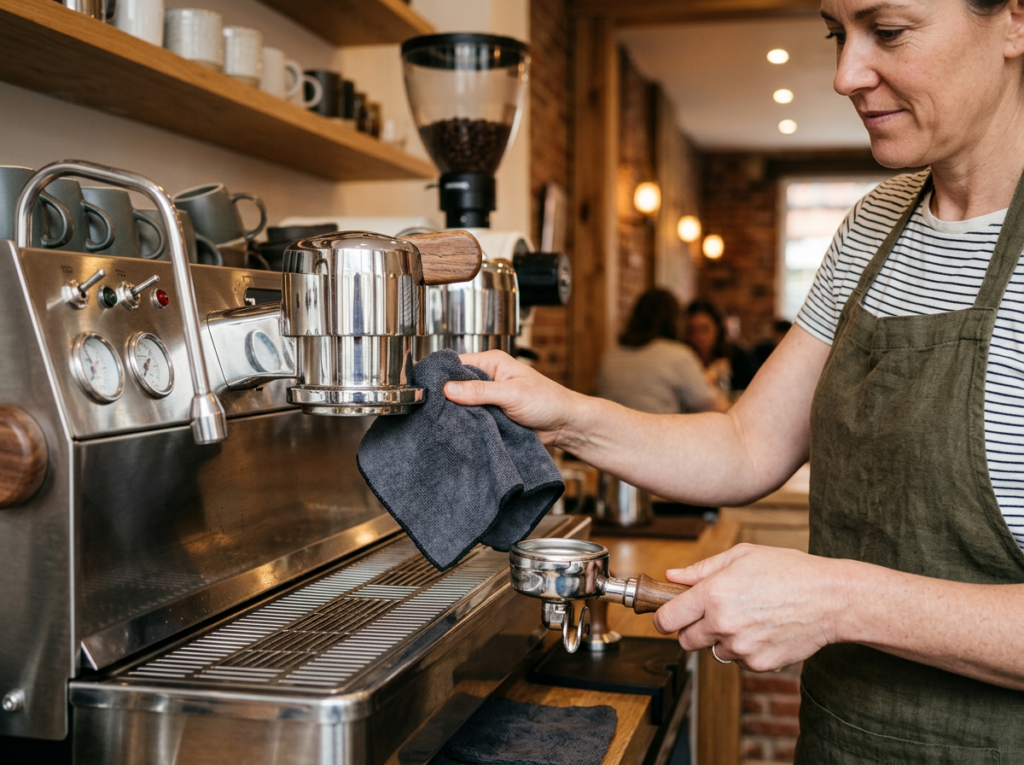
Cleaning decisions feel minor because the cost shows up indirectly. When caustic chemistry wears down a gasket or a seal, the bill arrives as a service call rather than a cleaning expense. Service calls for commercial equipment typically run $150 to $400 depending on the issue, and the repair is only part of it.
If your espresso machine handles 60% of ticket transactions, two hours down during the morning rush removes most of the revenue from the day’s busiest stretch.
Properly maintained commercial machines can last 10 to 15 years. But with aggressive caustic cleaning over time, that window shrinks. An owner who replaces a machine at year seven instead of year twelve will absorb a five-year depreciation hit they didn’t plan for.
When you look at your full equipment suite (espresso machine, cold brew system, brewing equipment), cleaning products are more connected to capital costs than they appear.
Where it Shows Up in the Coffee
Equipment damage shows up in your coffee before it shows up in your service bills.
Caustic cleaners don’t always rinse completely, leaving trace residue in the lines or on brewing surfaces. These residues can:
• Affect flavor clarity
• Introduce bitterness or flatness
• Create inconsistency between batches
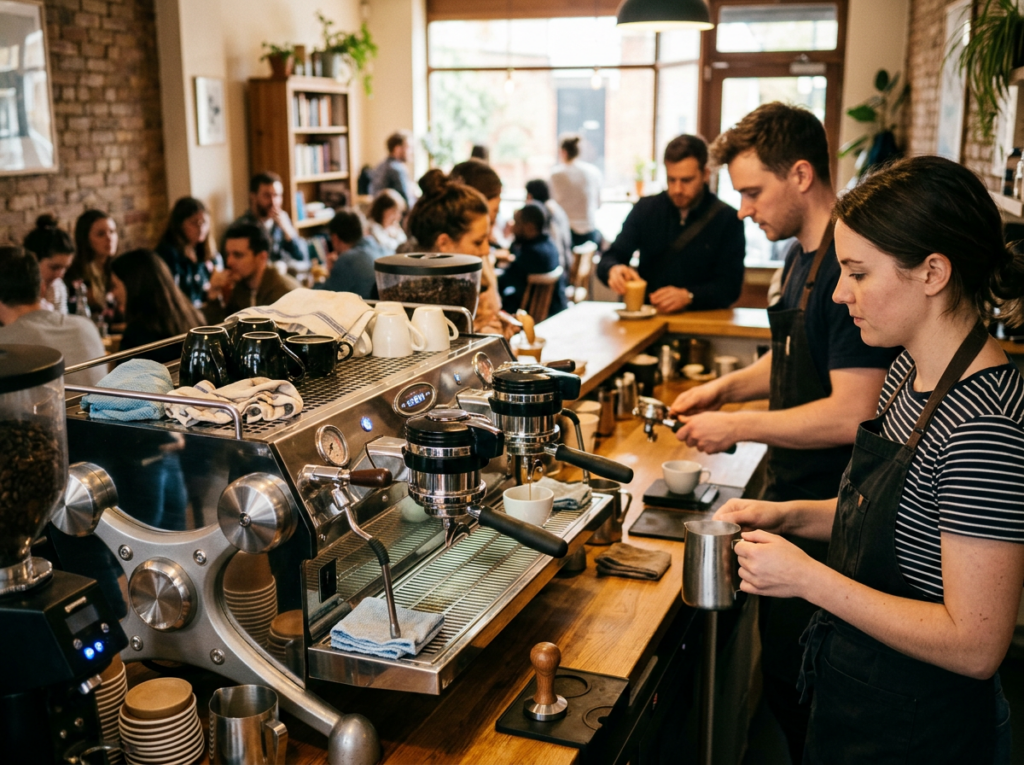
Customers will pick up on the change. They know the coffee is not what it was, and for a shop that runs on repeat business, this is not a small thing.
What a Smarter Approach Looks Like
Protecting your equipment investment doesn’t require overhauling your entire operation. It mostly requires one decision: switching to a cleaning solution that works with your equipment instead of against it.
Non-caustic cleaners, specifically those formulated for coffee equipment, clean effectively without the aggressive chemistry that degrades components over time. They remove coffee oils, residue, and biofilm without leaving behind chemical traces that affect flavor or eat away at internal surfaces.
The cleaning process itself stays simple. The goal is not to clean less; it’s to clean in a way that protects both the equipment and the output.
The difference won’t show up tomorrow. It shows up at year eight, when your equipment is still running the way it did at year two, your coffee is as consistent on a busy Saturday as it was the day you dialed in your recipe, and your service technician is coming out on schedule.
The Equipment Protection Checklist
If you’re evaluating your current cleaning approach, here are the questions worth asking:
• Does your current cleaner require hazmat handling, special storage, or safety equipment for your staff? If yes, that’s a complexity cost that compounds every time you onboard someone new.
• When was the last time you had a service call tied to a cleaning or residue issue? If it’s happened more than once, the pattern is worth examining.
• Does your coffee taste slightly different after a cleaning cycle than it did before? Any detectable change in flavor profile after cleaning is a signal that something in the chemistry is lingering.
If you answered yes to any of these, it’s worth reviewing what you’re currently using.
The Bottom Line
Independent coffee shops run on tight margins where every decision matters and connects to something larger.
The cleaning product sitting in your back room is not a neutral choice. It’s influencing equipment lifespan, service frequency, coffee consistency, and customer retention.
The good news: the right choice is also the simpler one. Non-caustic, non-corrosive cleaning that works with your equipment is available, easy to implement, and far less complicated than the legacy chemistry the category has defaulted to for years.
Your equipment is worth protecting. So is the coffee you worked this hard to get right.
Frequently Asked Questions
Q: How does improper cleaning damage coffee equipment?
A: Most commercial cleaning agents rely on caustic chemistry — high-pH compounds that break down residue aggressively. Used repeatedly over time, this chemistry degrades rubber gaskets, corrodes internal metal components, and wears away surfaces that are designed to maintain precise tolerances. The damage is cumulative. You won’t notice it after one cycle, but you’ll notice it when your equipment starts performing inconsistently or needs service ahead of schedule.
Q: Can the wrong cleaner affect how my coffee tastes?
A: Yes. Chemical residue from caustic cleaners doesn’t always rinse completely from brewing surfaces and lines. Trace amounts interact with coffee chemistry in ways that can introduce bitterness or flatness, and create inconsistency between batches. If your coffee seems “off” in a way you can’t attribute to beans, grind, or technique, the cleaner is worth a closer look.
Q: How do I know if my current cleaner is damaging my equipment?
A: A few signals to watch for: increased frequency of service calls, gasket replacements, or unexplained performance drops; any detectable flavor change after a cleaning cycle; manufacturer warranty language that specifies approved cleaning solutions you may not be using. If any of these apply, it’s worth taking a closer look at what’s in your cleaning product.
Subscribe for Promotions & New Product Updates
FREE GUIDE FOR COFFEE SHOPS
Build More Consistency
Into Every Cup
Simple cleaning routines and practical systems to help protect coffee quality every day.