
Cleaning Should Never Be the Riskiest Part of Your Coffee Program
Safer Chemistry, Fewer Workarounds, More Peace of Mind on Bar
Independent coffee shops manage risk every day. Food safety, equipment reliability, staff training, and supply chain continuity all run quietly in the background until something goes wrong.
What many owner-operators don’t realize is that traditional coffee-cleaning products quietly introduce preventable risks. Not because anyone is careless, but because the systems themselves leave little room for human error. Cleaning shouldn’t add stress to an already busy operation. It should remove it.
NowBrew formulation is centered on the idea that cleaning should reduce risk, not create it.
How Safer Cleaning Reduces Accidents, Downtime, and ‘Close Shift’ Chaos
In food and beverage environments, serious incidents rarely come from reckless behavior. They come from normal workdays.
Imagine the last hour of a Friday close. Someone grabs the nearest bottle of cleaner, with a worn label and the wrong cap from another bottle. The rinse runs short because the next task is already behind. No one is reckless. They’re just moving fast in a shop that can’t pause. That’s exactly why cleaning chemistry shouldn’t punish normal human pace.
Traditional caustic and acidic cleaners can become dangerous in moments like this. When chemistry is unforgiving, small mistakes carry outsized consequences. Safer cleaning chemistry changes that dynamic. When exposure risk is lower by design, a rushed moment doesn’t automatically become a crisis.
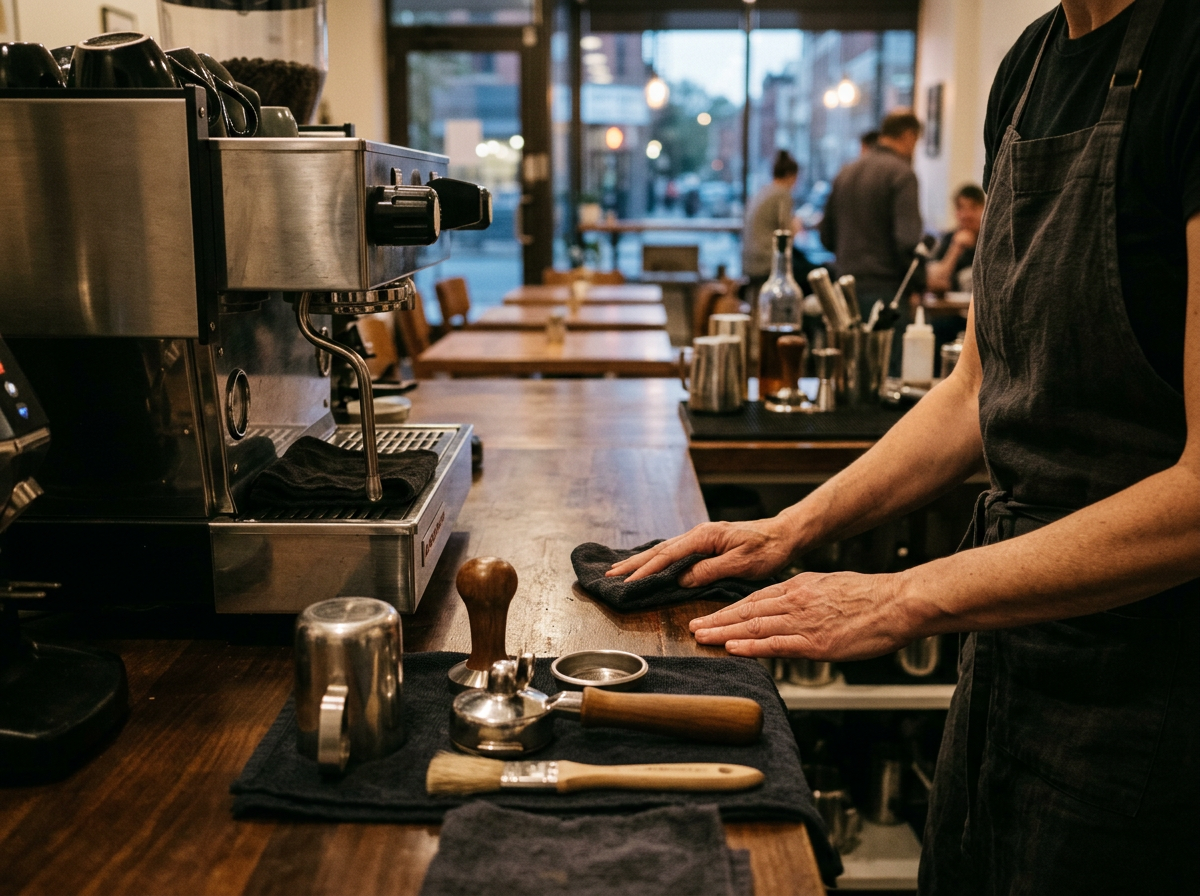
Coffee Equipment Cleaning: The Hidden Food Safety Risk
Most food safety conversations focus on ingredients, storage temperatures, and cross-contamination. But beverages travel through lines, valves, and faucets that require regular cleaning to keep contaminants out of the equipment and the consumer’s cup.
That’s where cleaning products enter the food safety equation. When the cleaner itself carries a high risk, the margin for error shrinks fast. A small mistake, such as the wrong dilution or skipping a rinse, can quickly lead to inspections, downtime, or insurance issues.
Safer cleaning chemistry widens that margin. It allows cleaning to be done confidently around food and beverage equipment without requiring isolation, special storage, or anxiety about who’s performing the task.
Why the Right Cleaning Approach Matters for Independent Shops
Reputations in independent coffee shops are built cup by cup and can be damaged far faster than they’re earned.
One incident can lead to lost service time, staff injury concerns, regulatory scrutiny, or shaken customer trust. Risk reduction has to work in real conditions, not rely on perfect execution every time. The most resilient systems are designed with human reality in mind.
Coffee Cleaning Supply Chain Issues: The Hidden Operational Risk
Chemical risk isn’t the only vulnerability hiding in cleaning routines. Supply chain reliability matters just as much.
When a cleaner is backordered for weeks, shops are forced into workarounds: stretching products beyond recommended limits, increasing dilution ratios, skipping steps, or substituting “close enough” alternatives. Service can’t stop while waiting on a shipment.
Consistent access to the right product supports consistent procedures. And consistency is what protects quality, safety, and staff confidence over time.
Reducing Risk Without Adding Complexity
Cleaning doesn’t exist in isolation. It supports every pour, every interaction, and every review a customer leaves behind.
The safest systems are the ones that fit naturally into daily operations:
- Safe enough to use confidently
- Simple enough to follow consistently
- Available when you need it
Risk rarely announces itself. It hides in routines that feel normal and products that haven’t been questioned in years. Awareness starts when operators recognize that cleaning shouldn’t be the most dangerous or unpredictable part of their coffee program.
If you’re thinking about how safety, reliability, and peace of mind fit into your operation, let’s talk through what you’re using now.
Frequently Asked Questions About Safe Coffee Cleaning Products
Q: What makes traditional coffee cleaning products dangerous?
A: Traditional coffee cleaners contain caustic chemicals and strong acids that can cause serious injury if accidentally consumed or improperly handled. Even small mistakes, like incomplete rinsing or rushed procedures, can create hazardous situations in busy coffee shop environments.
Q: How is NowBrew different from traditional coffee cleaning products?
A: NowBrew uses a non-caustic, non-corrosive formula that’s safer by design. It cleans effectively without the severe health risks associated with traditional caustic and acidic cleaners, making it inherently safer even when mistakes happen.
Q: Why do coffee cleaning supply shortages create safety risks?
A: When cleaning suppliers have 6-8 week lead times, coffee shops may stretch products longer than recommended, substitute inappropriate alternatives, or skip cleaning steps entirely. This breaks down safety procedures and increases contamination risks.
Q: Can cleaning products really cause liability issues for independent coffee shops?
A: Yes. The most frequent calls from offices to poison control centers are about drinking coffee pot cleaner instead of coffee—a mix-up that happens more often than most operators realize. Coffee shops use the same types of line-cleaning chemistry, which means the underlying risk isn’t hypothetical.
Most incidents are handled quietly through poison control or emergency room visits and don’t make headlines unless multiple people are affected. But when exposure does lead to injury, the liability consequences can be severe. Accidental ingestion, skin contact, or contaminated beverages have triggered lawsuits, insurance claims, and regulatory scrutiny in food service environments. See: https://www.poison.org/articles/poisoned-at-the-office
The risk isn’t just about what happens when something goes wrong. It’s about operating every day with cleaning products that create liability exposure in the first place—products that require special storage, handling protocols, and constant vigilance to use safely around food and beverage equipment.
Q: What should I look for in safer coffee equipment cleaning products?
A: Look for non-caustic, non-corrosive formulations that don’t require special storage or handling procedures. Reliable supply availability is also critical—you shouldn’t have to compromise on safety because products are backordered.
Q: How often should coffee equipment be cleaned with safe cleaning products?
A: Cleaning frequency depends on your equipment and volume. Espresso machines typically need daily cleaning, while cold brew systems should be cleaned according to manufacturer recommendations—often weekly or bi-weekly. Consistent access to reliable cleaning products makes it easier to maintain proper schedules.
Subscribe for Promotions & New Product Updates
FREE GUIDE FOR COFFEE SHOPS
Build More Consistency
Into Every Cup
Simple cleaning routines and practical systems to help protect coffee quality every day.