
Why Clean Equipment Is the Foundation of Repeatable Coffee Quality
How Coffee Equipment Cleaning Affects Espresso Quality and Consistency
Every independent coffee shop has a signature shot.
It’s the one you dialed in carefully during a quiet hour, adjusting grind and dose until everything clicked. The sweetness landed, the bitterness backed off, the acidity behaved. It’s not written on the menu, but your regulars recognize it when it’s right.
But the signature only holds when the equipment is clean enough to deliver repeatable extraction. Flavor drift rarely starts with something breaking. It starts quietly, inside valves, screens, and internal pathways where residue builds long before alarms go off. Understanding that connection between flavor and machine cleanliness is the first step to keeping your flavor steadily on track.
Coffee Extraction Problems: How Buildup Affects Espresso Pressure
Most operators have lived some version of the following.
Monday morning: Shots are landing right around the usual time. Pressure feels normal, taste is clean. By Wednesday, the barista on the morning shift notices the shot is dragging just a little. Nothing dramatic, maybe an extra second or two, but enough to raise an eyebrow.
So, they tweak the grind finer.
Thursday afternoon: Another barista pulls a shot that runs fast instead. Pressure is bouncing around, and the flavor is slightly hollow. Now the grind goes back the other direction. Maybe the dose changes. Someone adjusts the yield to compensate.
Friday evening: Everyone is “fixing” the recipe, and no one can quite explain why it suddenly feels so hard to repeat. The machine still turns on. The pumps still run. Nothing is technically broken, but the espresso is no longer predictable.
What’s actually happening isn’t in the recipe at all.
Inside the group head and internal valves, oils and fine coffee particles have been slowly narrowing the pathways where water moves under pressure. The flow resistance changed just enough to throw off extraction, but not enough to trigger alarms or obvious failure. Pressure builds differently shot to shot, depending on how warmed up the machine is and how much residue is in play at that moment.
From the outside, it looks like inconsistency. From the inside, it’s basic physics: restricted flow alters pressure.
This is the moment where cleaning matters more than adjustment. Because no amount of dialing in can compensate for a system that’s quietly changing its behavior every hour. Until the buildup is removed, you’re not repeating a profile, you’re chasing one.
And that chase almost always ends the same way: frustration, wasted coffee, and a growing sense that the machine just isn’t as reliable as it used to be.
Coffee Equipment Residue: The Hidden Factor in Espresso Extraction
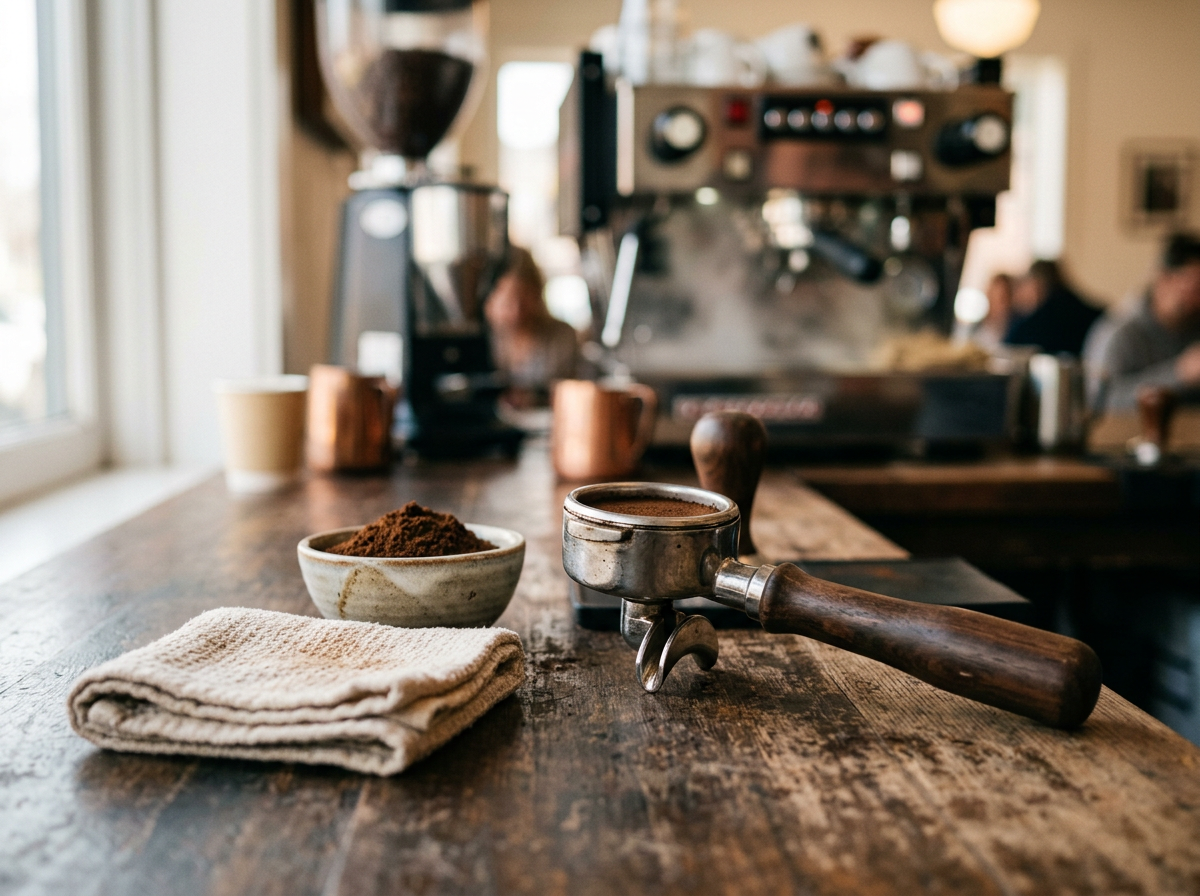
Extraction is influenced by everything the water encounters as it passes through the machine. Oils, fine particulates, and mineral residue don’t just affect taste; they affect resistance, pressure, and consistency.
When those internal surfaces aren’t cleaned regularly and effectively, the machine starts telling a different story than your recipe expects. The result is wasted time, wasted coffee, and unnecessary stress for baristas trying to do the right thing.
A clear, consistent cleaning routine protects the flavor profile you worked to create, the equipment investment you rely on, and the uptime your shop runs on. That’s day-to-day reality behind the bar.
Simple Coffee Cleaning Routines for Independent Coffee Shops
In a small shop, training usually happens fast. New hires rotate in, coverage shifts, and owners aren’t just overseeing systems, they’re often the ones fixing them when something goes wrong.
When a cleaning routine has too many steps, it doesn’t fail all at once. It drifts. A step gets skipped during a busy close. A measurement gets eyeballed. A process gets shortened “just this once.”
And when something eventually goes wrong, it’s usually the owner who ends up diagnosing the fallout.
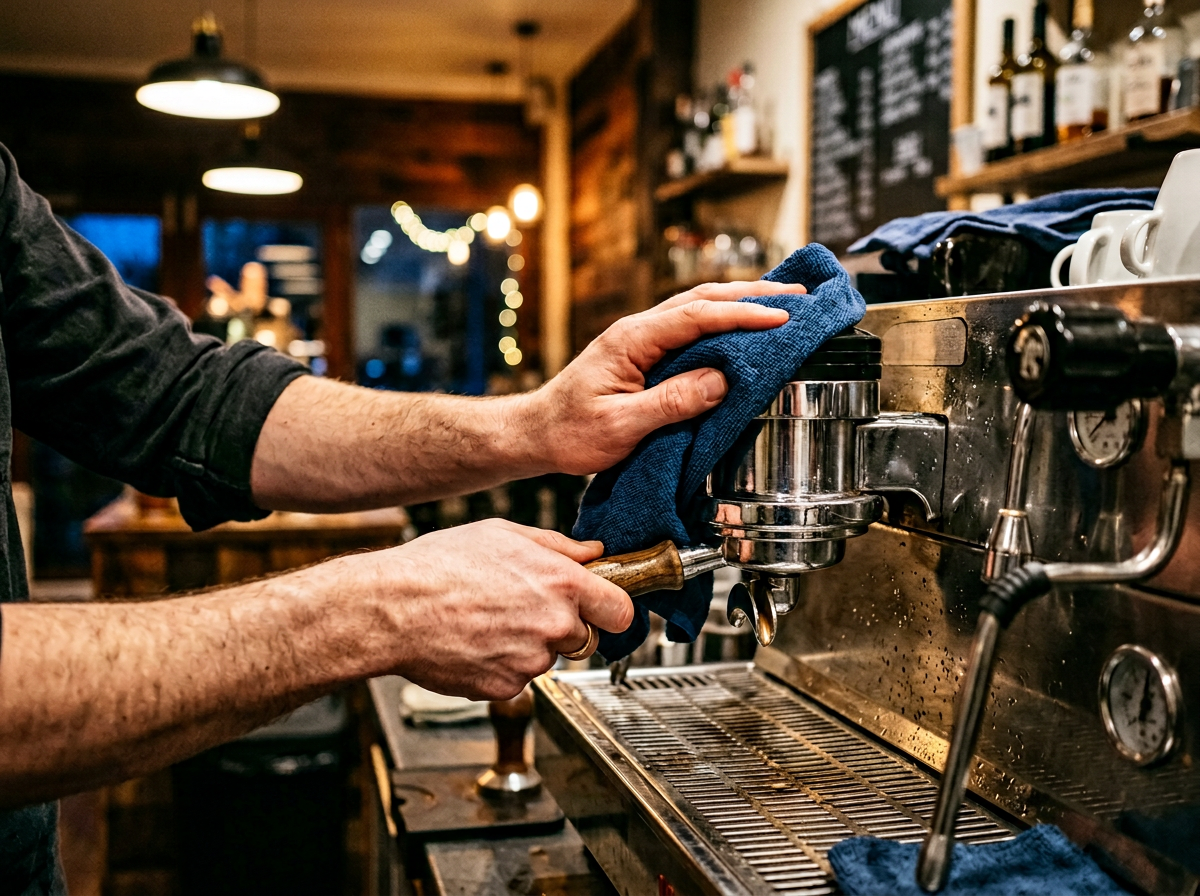
Education means recognizing that the best cleaning routine is the one your team can repeat exactly, every time, regardless of who’s on bar.
How to Create Repeatable Coffee Cleaning Procedures for Staff
The most effective cleaning routines share a few traits:
- They’re easy to remember
- They don’t require special judgment calls
- They fit naturally into open and close
Simple, repeatable steps make training easier and outcomes more predictable. When everyone follows the same process, equipment behaves the same way day after day.
That consistency shows up in flavor and through fewer mid-shift troubleshooting problems that never needed to happen in the first place.
Preventive Maintenance for Espresso Machines: Why Regular Cleaning Matters
One of the biggest educational shifts for operators is reframing cleaning as preventive maintenance rather than a reaction to machine failure. Waiting until something breaks is expensive. Waiting until flavor drifts is already too late. By that point, you’ve been compensating without realizing it.
Consistent cleaning keeps systems stable, so dialing in stays intentional instead of reactive. It protects uptime, reduces service calls, and extends the useful life of equipment that represents a major investment for any independent shop. Education isn’t about adding more tasks. It’s about doing the right ones at the right time.
Training Baristas on Coffee Equipment Cleaning: Best Practices
Baristas don’t need chemistry lessons, they need clarity. When cleaning steps are simple and safe, training becomes faster and more durable. New team members can learn the routine without fear of messing something up, and experienced baristas don’t have to second-guess whether they’re doing it correctly.
That confidence matters. A team that trusts its tools works faster, cleaner, and with fewer errors, especially during long shifts where mental bandwidth is already stretched thin.

Coffee Shop Equipment Maintenance: Protecting Flavor and Uptime
A focus on education isn’t about telling operators they’re doing something wrong. It’s about giving language to things they’ve already experienced, such as flavor drift, inconsistent shots, and equipment that feels off before it ever breaks.
Understanding how cleaning routines influence extraction, training, and uptime helps operators make smarter decisions about products and systems.
The bottom line is, when equipment is clean, recipes hold. When routines are simple, teams stay consistent. And when consistency is protected, everything else becomes easier.
If you’re thinking about how your cleaning routine supports your flavor goals and your team’s reality, let’s talk about what you’re working with.
Frequently Asked Questions About Coffee Equipment Cleaning and Espresso Quality
Q: How does dirty coffee equipment affect espresso extraction?
A: Residue buildup in group heads, valves, and screens alters water flow and pressure distribution, causing inconsistent extraction. Oils, fine particulates, and mineral deposits create resistance that changes shot timing and taste, often before you notice visible equipment problems.
Q: Why do espresso shots suddenly taste different even when using the same recipe?
A: Flavor drift often starts with internal equipment buildup rather than recipe changes. When residue accumulates in group heads, screens, and flow pathways, it changes pressure dynamics and extraction patterns. What feels like a recipe problem is usually a cleaning problem.
Q: How often should espresso machine group heads be cleaned?
A: Daily backflushing is recommended for commercial espresso machines, with deeper cleaning of screens, gaskets, and group head components weekly or as needed based on volume. Consistent cleaning prevents buildup that affects shot quality and equipment performance.
Q: What’s the best way to train baristas on equipment cleaning?
A: The most effective approach uses simple, repeatable procedures that fit naturally into opening and closing routines. Clear steps without judgment calls make training faster and more reliable, especially for new hires or during busy shifts when mental bandwidth is limited.
Q: Can equipment buildup cause espresso machines to break down?
A: Yes. While residue initially affects flavor and consistency, prolonged buildup can damage pumps, valves, and seals, leading to costly repairs. Regular cleaning is preventive maintenance that extends equipment life and reduces service calls.
Q: Why is my espresso grinder producing inconsistent results?
A: Coffee oils and fine particles build up in grinder burrs and chutes, affecting grind consistency and causing clumping. Regular cleaning removes residue that impacts particle distribution and shot quality, even when the grinder appears to be working normally.
Q: What cleaning routine works best for small independent coffee shops?
A: The best routine is one your entire team can execute exactly the same way, every time. This typically means simple daily procedures (backflushing, basic cleaning) with weekly deep cleaning tasks. Complexity fails in small shops—simplicity protects consistency.
Q: How does coffee equipment cleaning affect business profitability?
A: Consistent cleaning reduces wasted coffee from troubleshooting extraction problems, extends equipment lifespan, minimizes costly repair calls, and protects the repeatable flavor quality that brings customers back. Poor cleaning creates hidden costs that compound over time.
Q: What are signs my coffee equipment needs more thorough cleaning?
A: Warning signs include slower or faster shot times without recipe changes, inconsistent pressure readings, flavor drift requiring constant recipe adjustments, visible residue on screens or group heads, and needing to “chase” your dialed-in profile with frequent grind or dose changes.
Subscribe for Promotions & New Product Updates
FREE GUIDE FOR COFFEE SHOPS
Build More Consistency
Into Every Cup

Simple cleaning routines and practical systems to help protect coffee quality every day.