
How Office Coffee Services Keep Cleaning Consistent Across Every Route and Branch
When Growth Creates Different Cleaning Routines
Imagine, two of your technicians service the same model of brewer on the same morning at two client locations across town from each other. One learned the cleaning routine from a senior technician at your first location. The other joined your team when you acquired a smaller company’s routes last year and still cleans the way that company did.
Both machines get cleaned, but with different products, in a different order, and on a different schedule.
When an office coffee service (OCS) has one route and a few technicians, the cleaning standard can exist as general knowledge across the company. As the company adds routes, technicians, or a second branch, the routine needs to be written down to keep everyone aligned.
Why Do Technicians Clean Coffee Machines Differently as an OCS Company Grows?
As an OCS company grows, it needs standardized procedures that can scale with the business. When a growing company continues to train through institutional knowledge, procedures can become guidelines instead of standards.
New technicians learn by riding along with whoever is available to train them. Afterward, they perform the work the way they were shown. Because each trainer may have a slightly different version of the cleaning process, the routine begins to vary across the team.
Another layer of variation develops when each branch orders its own supplies. Over time, product choices can differ from one location to another. Equipment manufacturers also publish different cleaning instructions and dosages, which branches may interpret differently. Without company-wide protocols, each location has more room to settle on its own product mix and routine.
Growth through acquisition can add further complexity. The acquired trucks arrive with their own cleaning products, and the technicians arrive with their own routines. Both tend to remain in place until someone establishes a new standard.
Most of this is not visible from the office. On paper, every machine is on a cleaning schedule, and every scheduled cleaning is completed.
Why Does It Matter If Every Branch Cleans a Little Differently?
Your clients see one company. A client with offices in two cities, served by two of your branches, expects the coffee to taste the same in both break rooms.
Different products, schedules, and cleaning steps can leave machines in different conditions. As a result, the coffee may taste different from one office to the next, and the client may notice before the service team does.
Different cleaning routines also create extra work beyond the route. Supply spending is difficult to compare when each branch buys different products. Moving a technician from one branch to another may require retraining on a different routine. When a machine has a problem, cleaning is harder to rule out if no one can confirm which products, steps, or schedule were used.
How Do You Set One Cleaning Standard for Every Route?
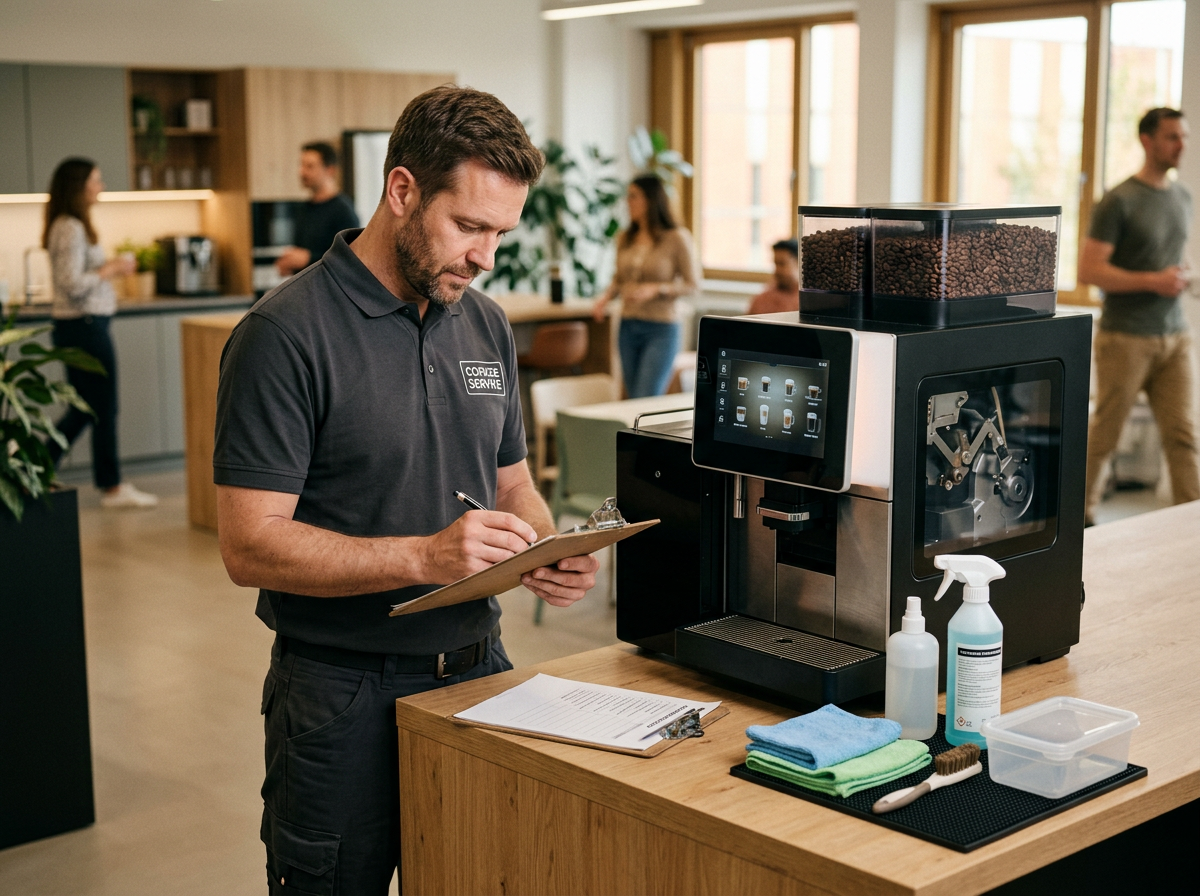
Determine which decisions should be made at the company level. There will be occasional exceptions, but they should be few and far between. Decide which parts of the routine can vary without affecting the result and which must remain consistent. Establish a process for evaluating and approving exceptions.
Pick one approved product list. Decide which cleaning products your company will use for each type of equipment and have every branch order from that list. A single product list removes one major source of variation because technicians are no longer choosing among different products at each location.
Document the routine. Keep each procedure short enough for a technician to follow at the machine. Use one page per machine type when possible. List the approved products, the steps in order, and how often the machine should receive a full cleaning based on the equipment manufacturer’s schedule. Keep a copy in every vehicle for easy reference.
Keep each stop simple. Fewer products mean fewer items to stock in the truck. Fewer steps mean fewer opportunities for one technician’s routine to drift from the established standard.
Name an owner. Choose one person to approve changes, update the written routine, and send the latest version to every branch. Without an owner, small changes can accumulate over time, and the routine may begin to look different from one branch to the next.
How Should New Technicians Learn the Cleaning Standard?
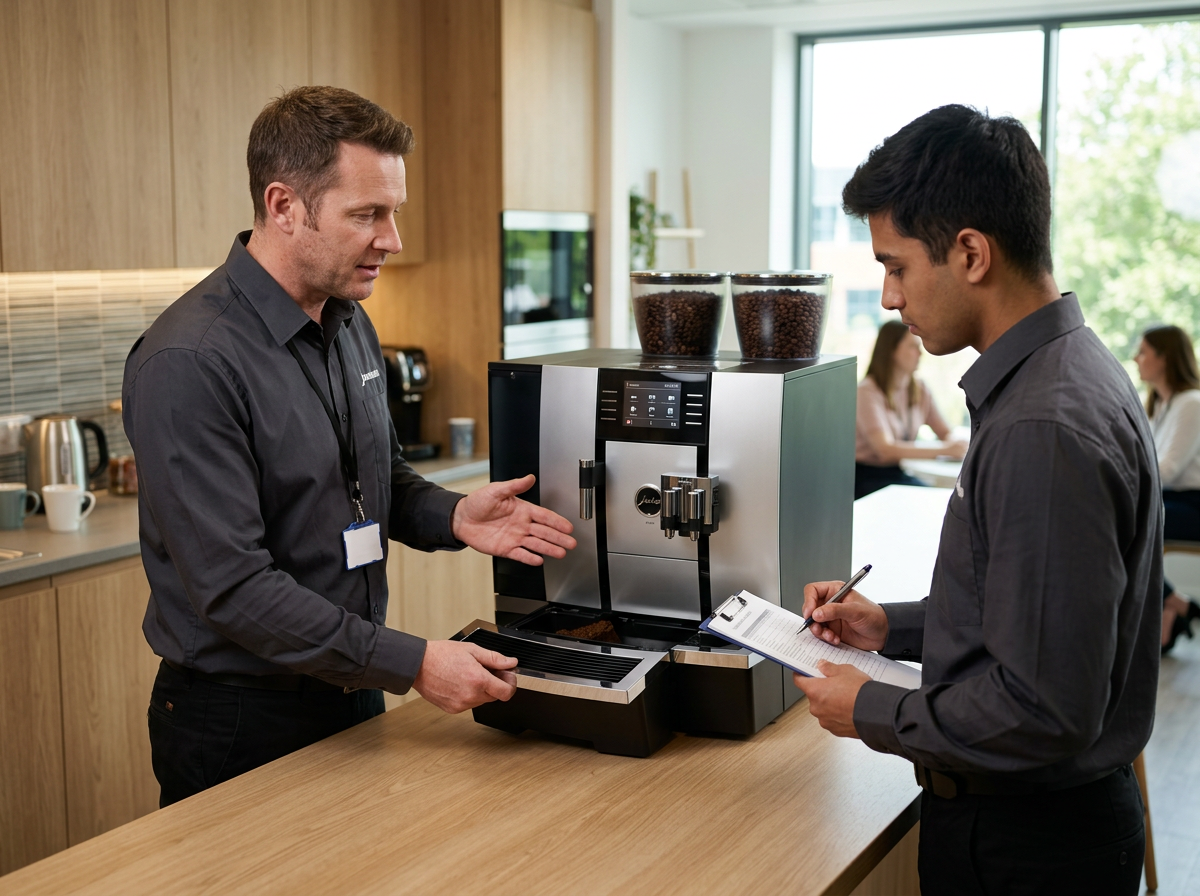
Ride-alongs still work well. Use the written routine during the ride-along instead of asking the trainer to teach the procedure from memory. When the trainer and the new technician work through the written routine together, the new hire learns the company’s process and the trainer receives a refresher.
Before a new technician runs a route alone, have them complete a full cleaning on each machine type they will service. This requires more time at the beginning but reduces uncertainty later.
What Should You Do About Cleaning on Routes You Acquire?
When you acquire routes or another OCS company, add cleaning to the transition checklist alongside accounts, equipment, and contracts.
Review the cleaning products on the acquired trucks and in the supply room, then ride along with technicians to understand their current routines. Set a date to move those routes to your standard and provide the same product list and written procedures used throughout the company.
Products on the approved list can be used up. Products outside the approved list should follow a separate phaseout plan.
How Do You Know the Standard Is Holding at Every Branch?
Three checks can show where a branch’s routine has started to drift:
Review supply orders by branch. A product outside the approved list may indicate that the written routine and the routine used in the field no longer match.
Include periodic ride-alongs. A branch manager observing the routine at the machine can identify product substitutions, missed steps, and instructions that no longer fit the equipment.
Ask technicians where the routine does not fit the equipment. Technicians are often the first to find a step that takes too long, requires the wrong tool, or does not match a particular machine. Periodically requesting feedback and updating the instructions keeps the routines current and practical.
What Does a Single Cleaning Standard Do for a Growing OCS Company?
Written standards and procedures give every new route, technician, and branch the same starting point. The approved products are already selected, the steps are already documented, and the person responsible for updates is already named.
Training becomes more consistent, purchasing becomes easier to compare, and new routes do not have to develop their own cleaning procedures.
Growth still adds work, but it does not have to add another version of the cleaning routine.
Frequently Asked Questions
Q: How do office coffee service companies keep cleaning consistent across multiple branches?
A: Set the standard at the company level: one approved product list, one written routine for each machine type, and one person responsible for updates. Every branch should work from the same procedures and order from the same product list.
Q: What should a written coffee-equipment cleaning standard include?
A: For each machine type, list the approved products, the steps in order, and the frequency of full cleaning based on the manufacturer’s schedule. When possible, keep the routine to one page that a technician can follow at the machine.
Q: What should we do with cleaning products that come with an acquired route?
A: Review the products on the acquired trucks and in the supply room, then ride along with technicians to understand their current routines. Set a date to move the routes to your company standard and train the technicians using the same product list and written procedures used across the company. Products on the approved list can be used up, while other products should follow a separate phaseout plan.
Building one cleaning standard for every route and branch? The NowBrew team can help you review the products and procedures used across your routes and identify opportunities to simplify the routine.
Subscribe for Promotions & New Product Updates
FOR OFFICE COFFEE SERVICE PROVIDERS
Simplify Cleaning
Across Every Route
Fewer cleaning steps. More consistent routines. Better equipment care across every location.