
Non-Corrosive Coffee Equipment Cleaning: Why It Matters for Independent Shops
Independent coffee shops make intentional investments: espresso machines, brewers, grinders, water systems. None of it is accidental, and none of it is cheap. What’s easy to overlook, however, is how much day-to-day cleaning choices influence whether those investments last or quietly erode over time.
Non-corrosive chemistry, shorter cleaning routines, and safer handling don’t just make cleaning easier. They protect the most valuable assets in the shop: equipment, people, and time.
How Harsh Cleaning Chemicals Damage Espresso Machine Components
Most equipment damage doesn’t happen all at once. It happens gradually.
Harsh cleaners can do their job in the moment while quietly working against the machine over months and years. Seals dry out, internal finishes wear, and valves and fittings degrade faster than expected. Nothing looks broken, until it is.
For independent operators who rely on equipment uptime, this matters. Espresso machines and brewers are long-term investments meant to perform consistently for years, not just survive warranty periods.
Maintenance shouldn’t become a hidden source of wear and tear. Non-corrosive cleaning is essential because a cleaner being effective isn’t enough. Cleaning must be effective and protective over time.
Espresso Machine Maintenance: Choosing Cleaners That Extend Equipment Life
Independent owners already do the hard part: choosing quality equipment and taking care of it daily. The goal of a cleaning routine should be to support that effort, not introduce new risks.
When cleaning chemistry is non-corrosive, operators don’t have to wonder whether today’s maintenance is costing them tomorrow’s service call. That peace of mind isn’t theoretical. It shows up in fewer breakdowns, fewer surprises, and more predictable performance.
Protecting assets is about respecting how those systems are designed to operate.
Time-Saving Coffee Cleaning Routines for Independent Coffee Shops
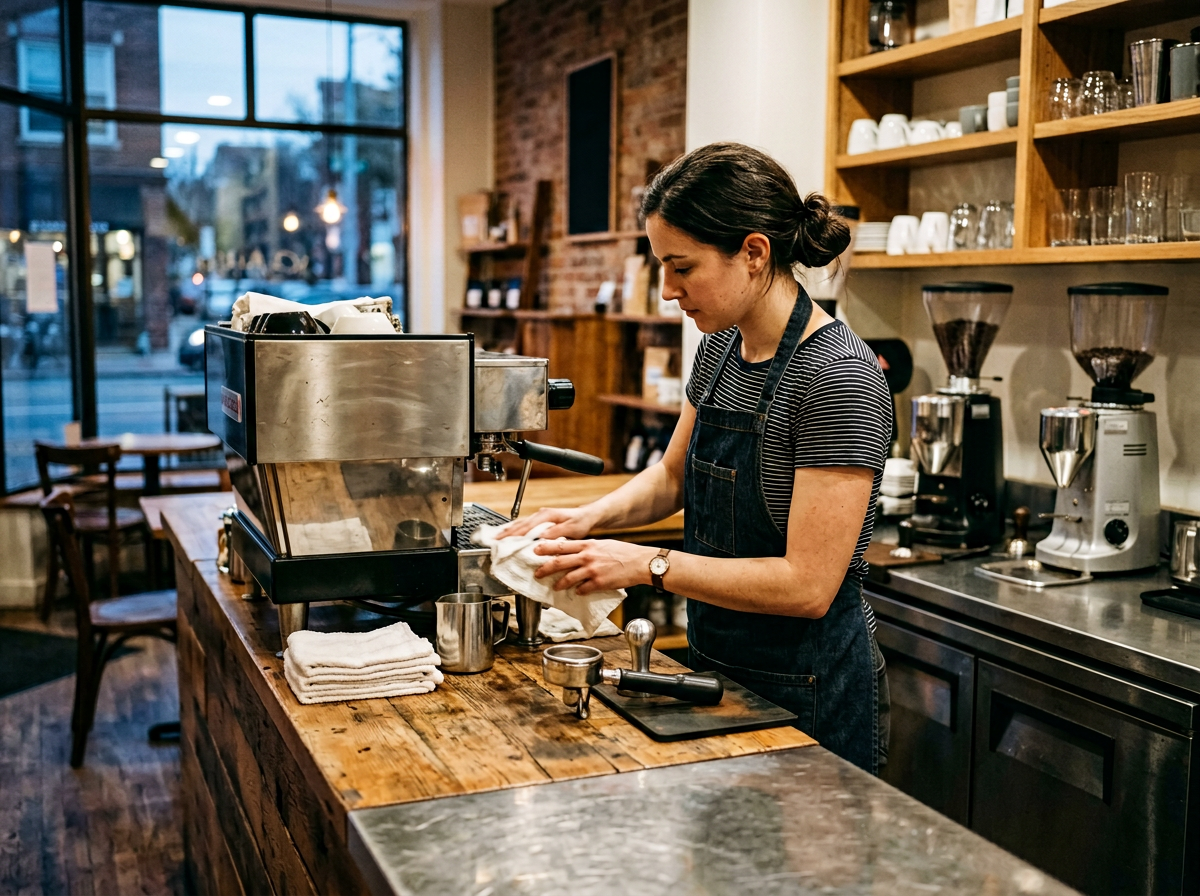
Cutting cleaning time from 45 minutes to 15–20 means more than getting out the door faster. It’s about creating operational space, something small shops rarely have enough of.
That reclaimed time can go in a lot of directions:
- Dialing in shots instead of rushing past them
- Training a new barista without falling behind
- Getting ahead of prep instead of chasing it
- Closing cleanly without cutting corners
A simpler, faster cleaning routine doesn’t reduce standards; it allows teams to focus on what drives quality, turning time from a constraint into a resource they can use to run a better shift.
Simple Coffee Equipment Cleaning Procedures That Teams Will Follow
In theory, complex cleaning procedures come with safeguards. In practice, they come with drift.
When there are too many steps, too much handling, and too much risk, eventually the routine changes. Steps get skipped, training gets inconsistent, and when something goes wrong, it usually lands on the owner to diagnose and fix. Simple routines protect consistency precisely because they leave less room for interpretation. When everyone follows the same steps, outcomes stabilize.
Independent shops don’t have safety officers or compliance departments. Training happens peer-to-peer between rushes on the floor. That’s why NowBrew’s commitment to safer solutions matters. No burns. No goggles. No hazard labels. It removes an entire category of risk from the equation.
Safer products simplify training because there’s less that can go wrong. New team members don’t need specialized certifications. Experienced baristas don’t have to second-guess handling. Owners don’t have to worry about what happens if someone makes a mistake.
Coffee Shop Safety Compliance: Reducing Hazardous Chemical Requirements
Regulatory compliance is rarely about one big rule; it’s about consistently managing many small ones. Handling hazardous chemicals complicates that process, especially in high-turnover environments.
When cleaning products eliminate hazardous handling, compliance becomes simpler by default. Less complexity means less that can go wrong. Reducing risk upstream simplifies everything downstream—training, documentation, and day-to-day operations.
Best Coffee Cleaning Products for Equipment Protection and Efficiency
The real lesson isn’t that one feature matters more than another. It’s that time savings, safety, and equipment protection reinforce each other.
- Non-corrosive chemistry protects assets
- Faster routines free up operational time
- Safer handling reduces training and compliance friction
Together, they create a system that supports quality instead of competing with it.
That’s the standard independent shops should expect from their cleaning chemistry—and the standard NowBrew was built to meet.
Cleaning routines influence equipment lifespan. Safety profiles influence training success. Time savings influence quality focus. When those connections are clear, better decisions follow naturally. If you’re evaluating whether your current cleaning routine is protecting your assets, or quietly working against them, let’s talk about what you’re working with.
Frequently Asked Questions About Non-Corrosive Coffee Equipment Cleaning
Q: How do harsh cleaning chemicals damage espresso machines?
A: Caustic and acidic cleaners can degrade seals, dry out gaskets, corrode internal finishes, and damage valves and fittings over time. This gradual wear isn’t immediately visible but shortens equipment lifespan and increases maintenance costs, particularly affecting expensive components like group heads and pumps.
Q: What does “non-corrosive” mean for coffee equipment cleaners?
A: Non-corrosive cleaners have a balanced pH that cleans effectively without chemically attacking metal surfaces, seals, or gaskets. They remove coffee oils and residue without the harsh chemistry that degrades equipment components over months and years of regular use.
Q: How much time should coffee equipment cleaning take daily?
A: Effective daily cleaning routines should take 15-20 minutes for most independent coffee shops. This includes backflushing espresso machines, basic equipment wipe-downs, and grinder maintenance. Overly complex routines that require 45+ minutes often lead to cut corners and inconsistent execution.
Q: Do safer coffee cleaning products work as well as traditional caustic cleaners?
A: Yes. Modern non-caustic formulations like NowBrew are engineered to clean thoroughly without relying on harsh chemistry. The key difference is they protect equipment and people while delivering the same cleaning effectiveness—you don’t have to compromise safety for results.
Q: What safety certifications should I look for in coffee cleaning products?
A: Look for products with clear safety data sheets (SDS) showing non-caustic, non-corrosive formulations. NowBrew’s “triple-zero safety rating” means no burns, no special PPE requirements (goggles, gloves), and no hazardous chemical handling protocols—simplifying both use and compliance.
Q: How do cleaning products affect espresso machine warranty coverage?
A: Some espresso machine manufacturers specify approved cleaning products or chemical parameters in warranty terms. Using harsh or incompatible cleaners that damage seals, gaskets, or internal components may void warranty coverage. Non-corrosive cleaners are generally equipment-manufacturer friendly.
Q: Why is simple cleaning important for coffee shops with high staff turnover?
A: Complex multi-step procedures with special handling requirements become inconsistent as staff changes. Simple routines are easier to train, faster to execute correctly, and less likely to drift over time. Consistency in cleaning protects both equipment performance and safety.
Q: Can coffee cleaning products really reduce compliance requirements?
A: Yes. When cleaning products eliminate hazardous chemical handling, you remove entire categories of regulatory requirements around storage, PPE, employee training documentation, and disposal protocols. Non-hazardous products simplify compliance by reducing risk upstream.
Q: What’s the real cost of using harsh coffee equipment cleaners?
A: Beyond the product price, harsh cleaners create hidden costs: shortened equipment lifespan requiring earlier replacement, more frequent seal and gasket replacements, increased training complexity and time, PPE and safety equipment costs, and potential liability from handling accidents. Non-corrosive alternatives eliminate these compounding expenses.
Subscribe for Promotions & New Product Updates
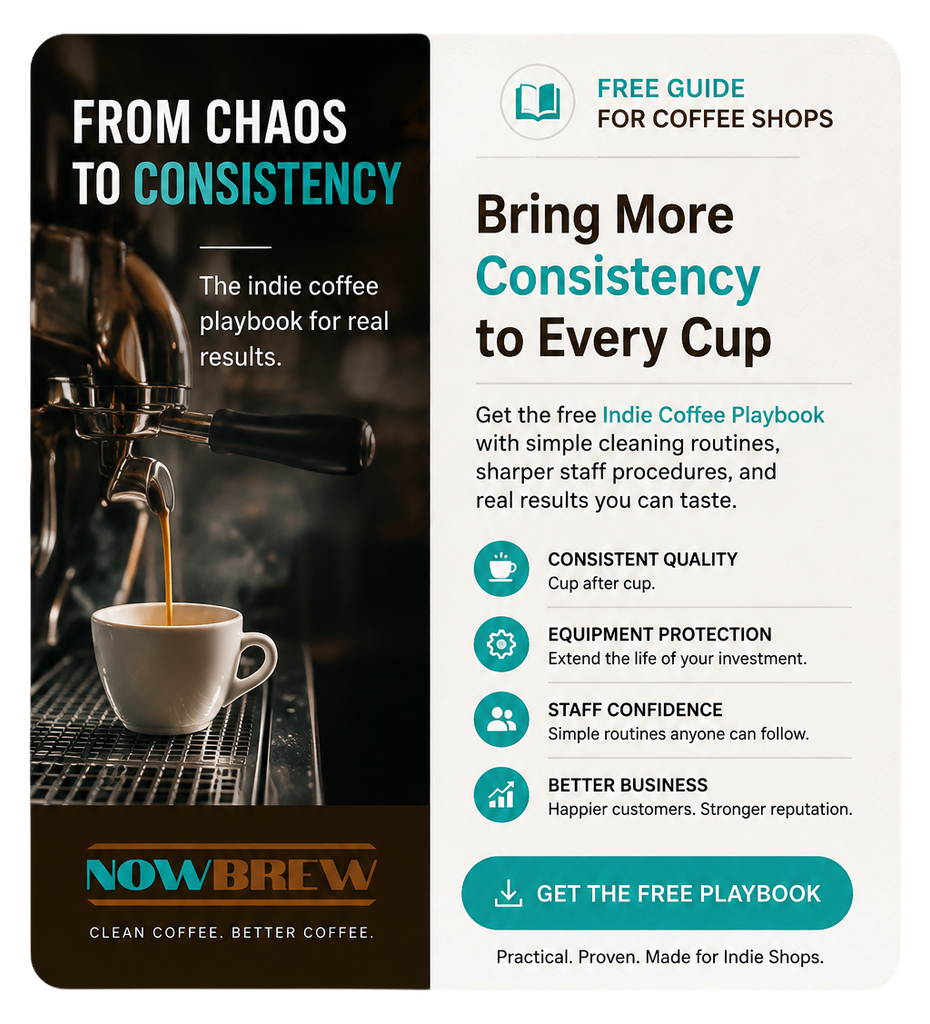
FREE GUIDE FOR COFFEE SHOPS
Build More Consistency
Into Every Cup
Simple cleaning routines and practical systems to help protect coffee quality every day.